Conduit Core Appliance
Purpose-built nodes that fulfill the Trusted Execution Layer's physical trust requirements.
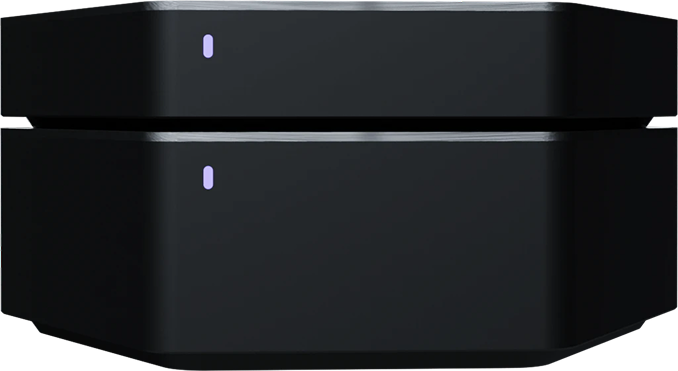
Five Modules. One Platform.
Mix and match to build your infrastructure
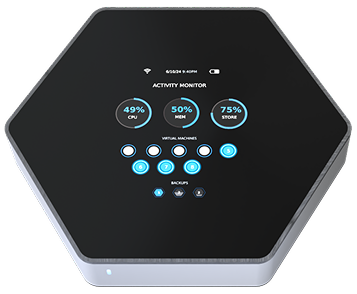
Connectivity
Multi-path networking
5G cellular, WiFi 7, and mesh networking with enterprise telco suite and automatic failover.
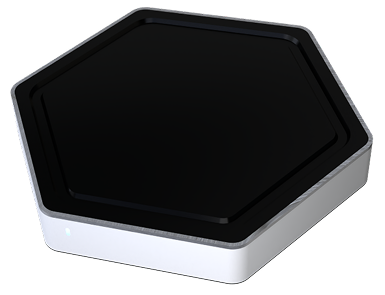
Security
FIPS 140-2 (Level 3) Rated
Rated secure compute environment for mission-critical workloads and protocol execution.
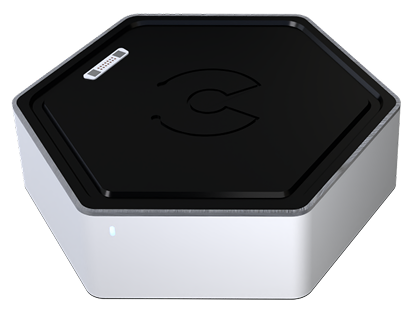
Compute
Kubernetes orchestration
Plug-and-play x86-64 compute with cloud marketplace integration for custom workloads.
Battery
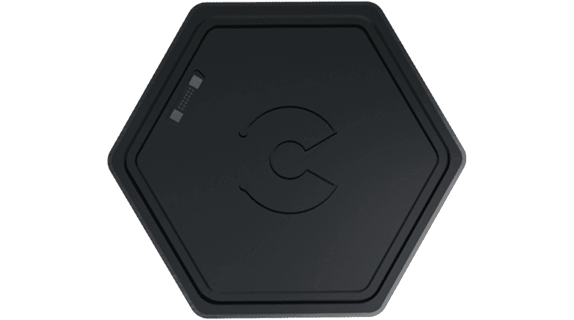
Stackable UPS
Uninterruptible power supply with stackable modules for extended runtime requirements.
MVNO
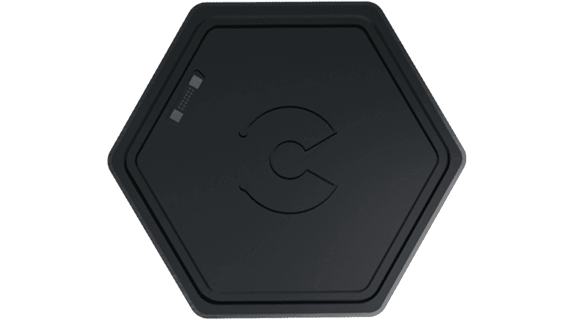
5G CORE + RAN
Complete mobile virtual network operations with 5G CORE and RAN for private cellular networks.
Every cryptographic guarantee in Conduit OS depends on the physical trust layer beneath it. This is that layer.
Conduit OS enforces legal authority proofs, computable contracts, and settlement finality in software. But software attestation has limits. A motivated adversary can compromise software. The Trusted Execution Layer's Authority operation requires that the trust guarantee reaches all the way to the hardware. These nodes exist because the Trusted Execution Layer demands them.
FIPS 140-2 Level 3 cryptographic modules, MIL-STD-810G environmental hardening, TEE-backed secure enclaves with destruction-on-tamper. These specifications were not chosen from a hardware catalog. They were derived from what the Trusted Execution Layer requires at the physical layer.
Conduit Network is what comes into existence when Conduit OS runs on Trusted Execution Layer-compliant hardware. This is that hardware.
Hardware specifications derived from the Trusted Execution Layer.
Five operations that run atomically, every time, by specification.
FIPS 140-2 Level 3
Federal cryptographic module standard. Physical tamper-evidence required - the module must detect and respond to physical tampering attempts. Level 3 is the level required for devices that operate in physically exposed environments.
MIL-STD-810G
U.S. military environmental engineering standard. Covers temperature extremes, humidity, vibration, shock, altitude, and other environmental stressors. Required for deployment in field and edge environments.
TEE-Backed Enclaves
Hardware-enforced trusted execution environment. Cryptographic operations and key material are isolated from the operating system. A software compromise cannot extract keys held in the TEE.
Destruction-on-Tamper
Physical intrusion triggers irreversible key destruction. A confiscated or compromised node yields no cryptographic material.
Threshold Cryptography
No complete key exists on any single device. Distributed key material requires threshold participation - compromising one node is cryptographically useless.
Cryptographic resilience is physical, not software-configured.
Every node on Conduit Network operates in a hardware-enforced secure enclave. Cryptographic guarantees - the tamper-evidence, the key isolation, the attestation - are enforced by the hardware, not by software configuration. A compromise of the software layer does not compromise the cryptographic guarantees, because the keys are held in hardware that the software cannot read.
This is the difference between "we encrypted it" and "the hardware makes it impossible to unencrypt without the physical device." For telecom infrastructure - where adversarial actors actively target network nodes - the distinction is not theoretical. It is the design requirement.
The hardware specifications (FIPS 140-2 Level 3, MIL-STD-810G, TEE-backed enclaves, destruction-on-tamper) exist because the Trusted Execution Layer's Authority requirement reaches all the way down to the silicon. The Trusted Execution Layer demanded physical-level security. The hardware is the answer.
Three-Module Architecture
Physical isolation of critical functions for uncompromised security.
The physical substrate of Conduit Network
Conduit Network is what comes into existence when these nodes run Conduit OS. The hardware is the physical substrate. The Network is the realization.

The Trusted Execution Layer demanded physical-level security. This is the answer.
Explore the hardware specifications, deployment requirements, and integration with Conduit OS.